Case study · FlavorByte
FlavorByte
Personalized dining experiences with faster restaurant discovery.
01 · Challenges
Decision fatigue. Addressing the "paradox of choice" where an overwhelming number of restaurant options leads to user frustration and drop-off.
Group coordination. Streamlining the friction-filled process of collective decision-making, where varying dietary preferences and schedules often lead to "decision paralysis."
Trust in AI. Designing an AI-driven recommendation interface that feels personal and reliable rather than robotic, ensuring users feel confident in the suggestions provided.
02 · Results
The final app design helped users find restaurants more efficiently and make collective decisions faster. The AI-driven features reduced the time spent searching for options by 30% and improved the accuracy of restaurant recommendations by 40%, leading to a better overall user experience.
03 · Discovery phase
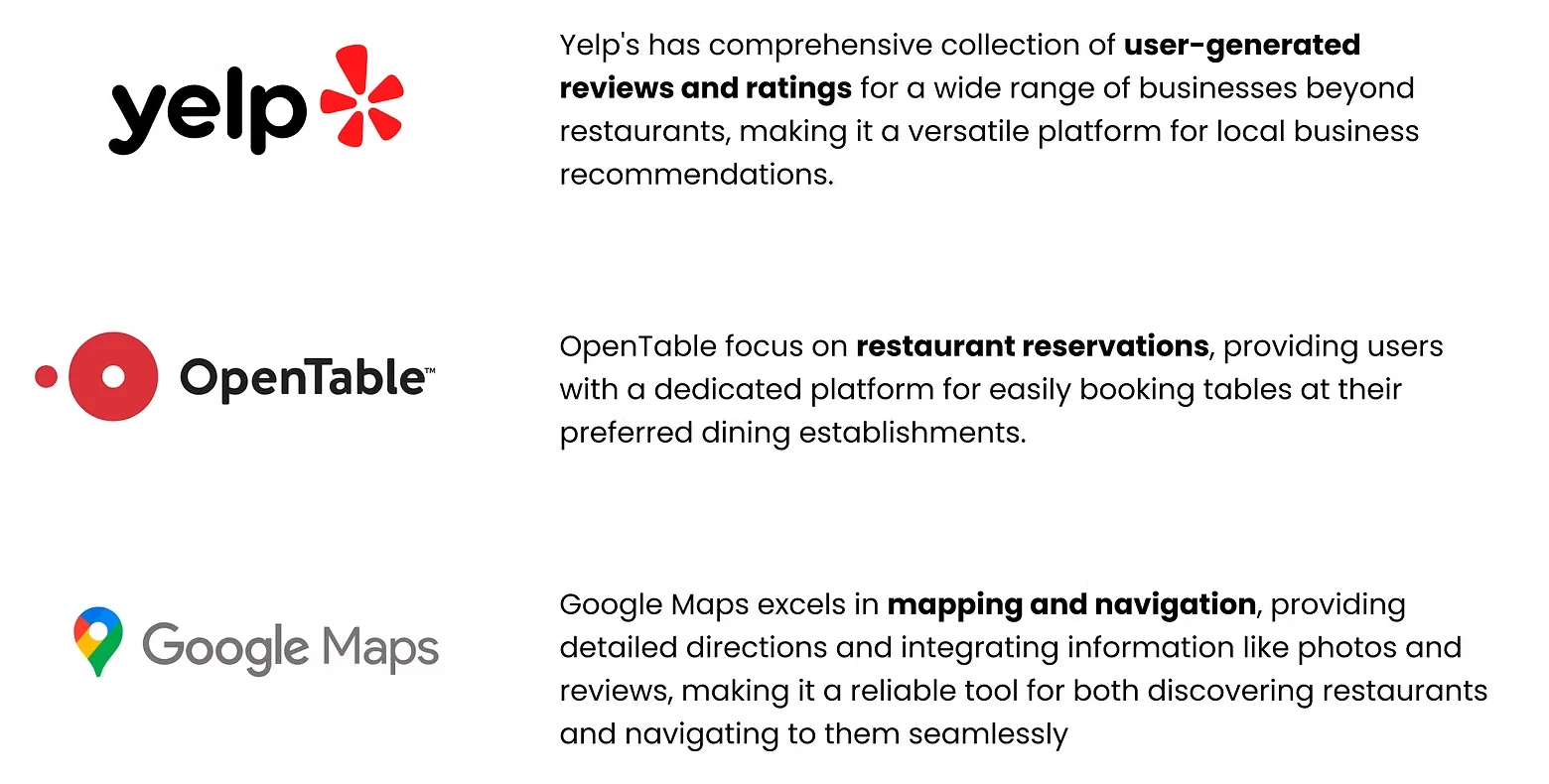
Competitor analysis. Conducted in-depth research on leading restaurant search apps like Yelp, OpenTable, and Google Maps to understand key features, identify market gaps, and recognize areas for potential enhancement.
Quantitative survey & user interviews. Launched an online survey with 10 participants and held four one-on-one interviews. This provided valuable insights into users' needs, challenges, and opinions about AI's role in restaurant search. The main pain points identified were the overwhelming number of restaurant options, the challenge of making group decisions, and the desire for personalized recommendations.
04 · Design and development
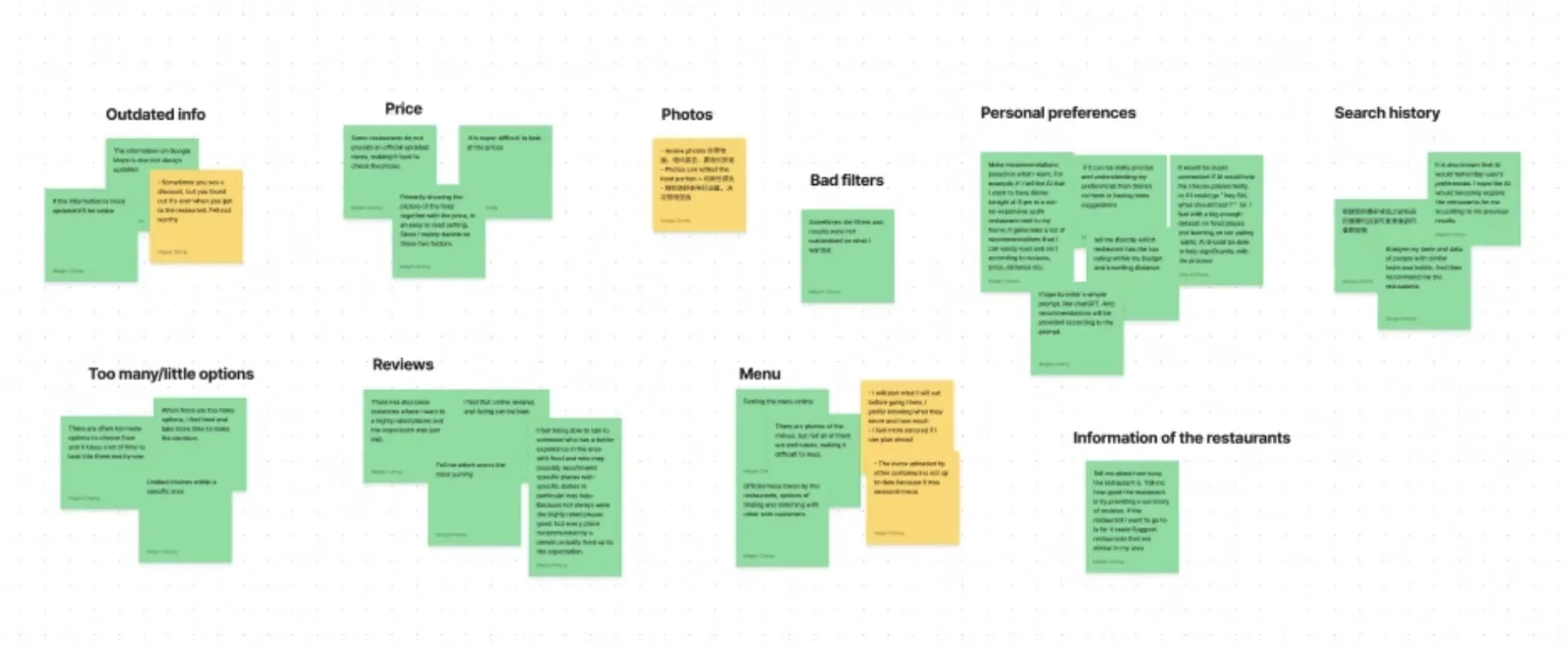
Affinity mapping & user journey mapping. Analyzed user data using affinity mapping, identifying common themes such as the paradox of choice and decision fatigue. The user journey map highlighted key pain points, which informed the design strategy.
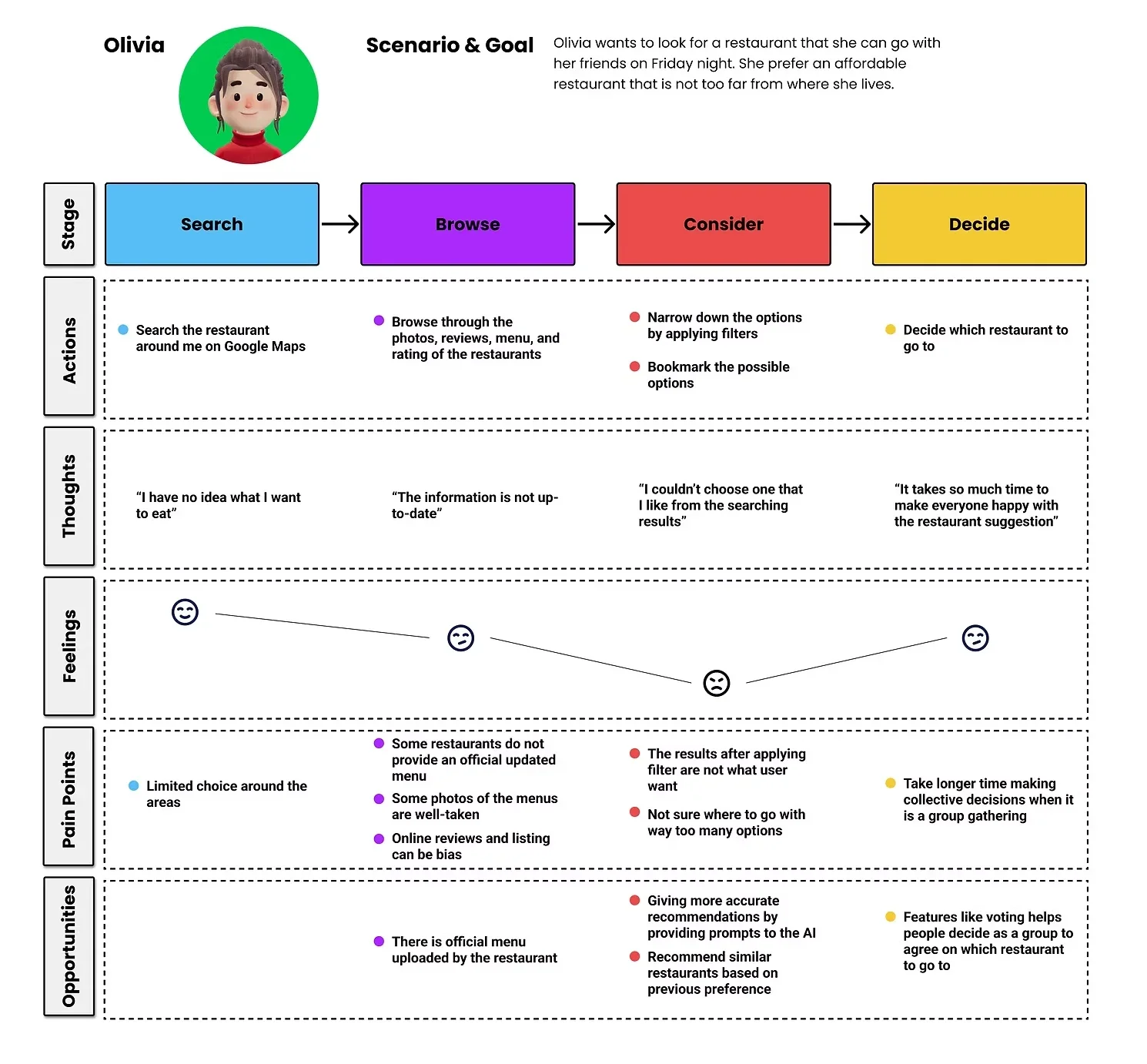
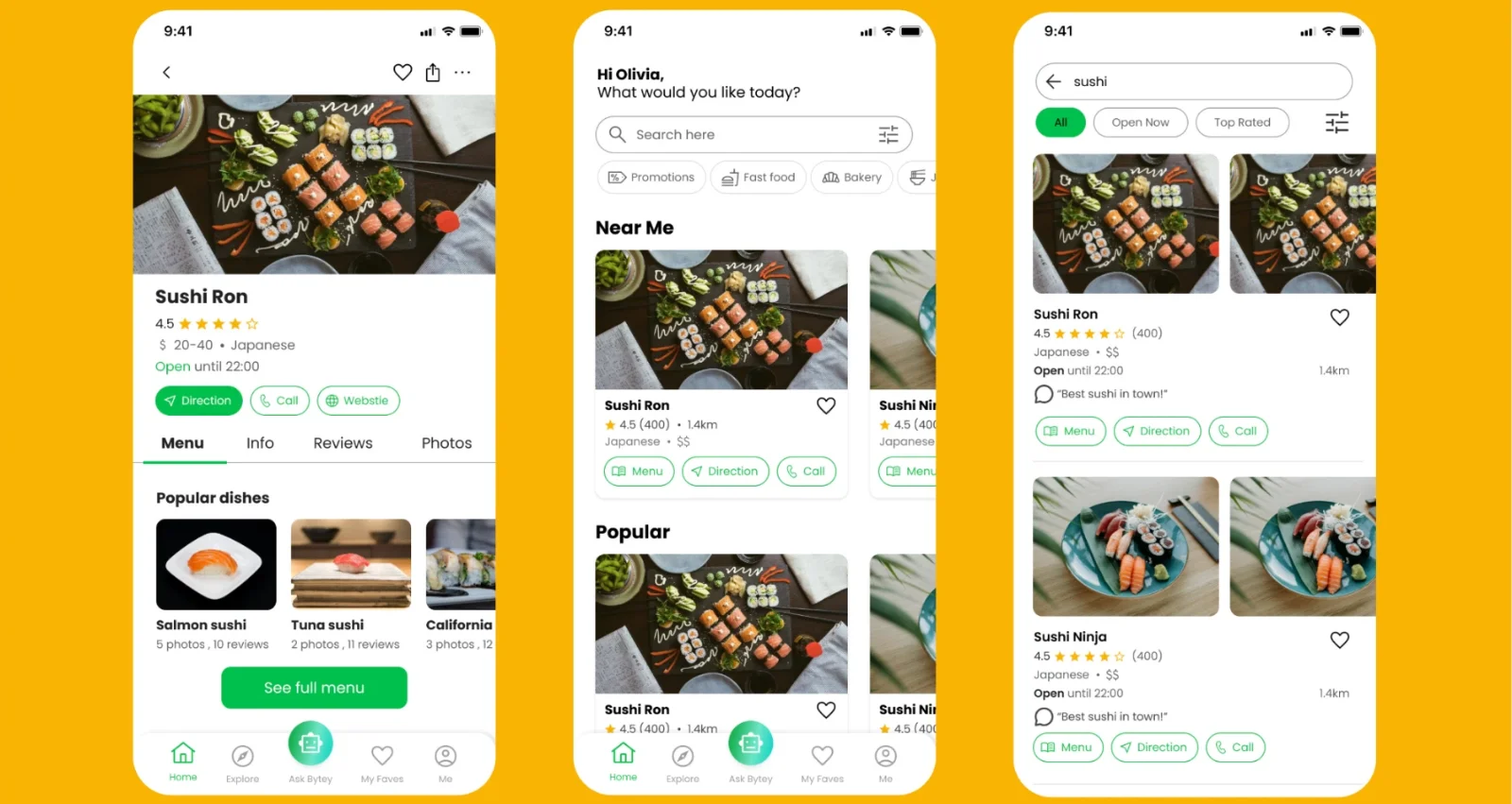
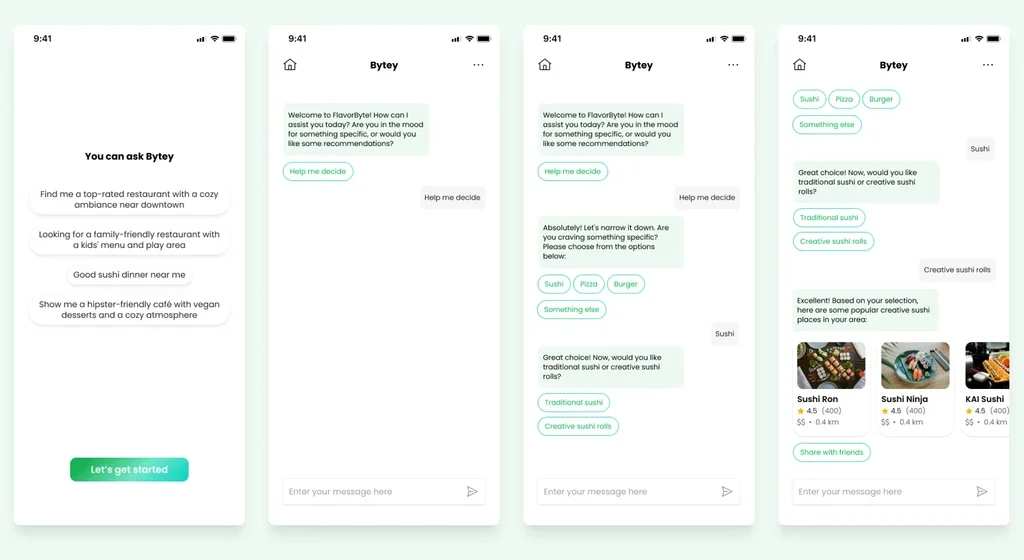
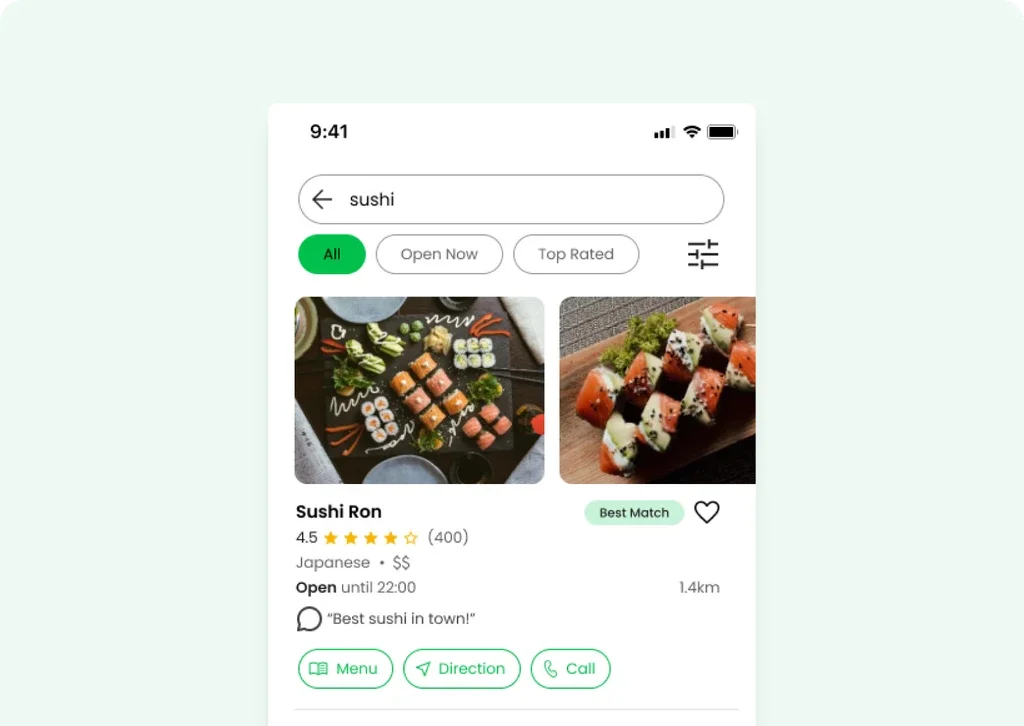
AI-driven recommendations. Designed AI-powered features to deliver personalized restaurant recommendations based on users' past preferences, making the search process faster and more accurate.
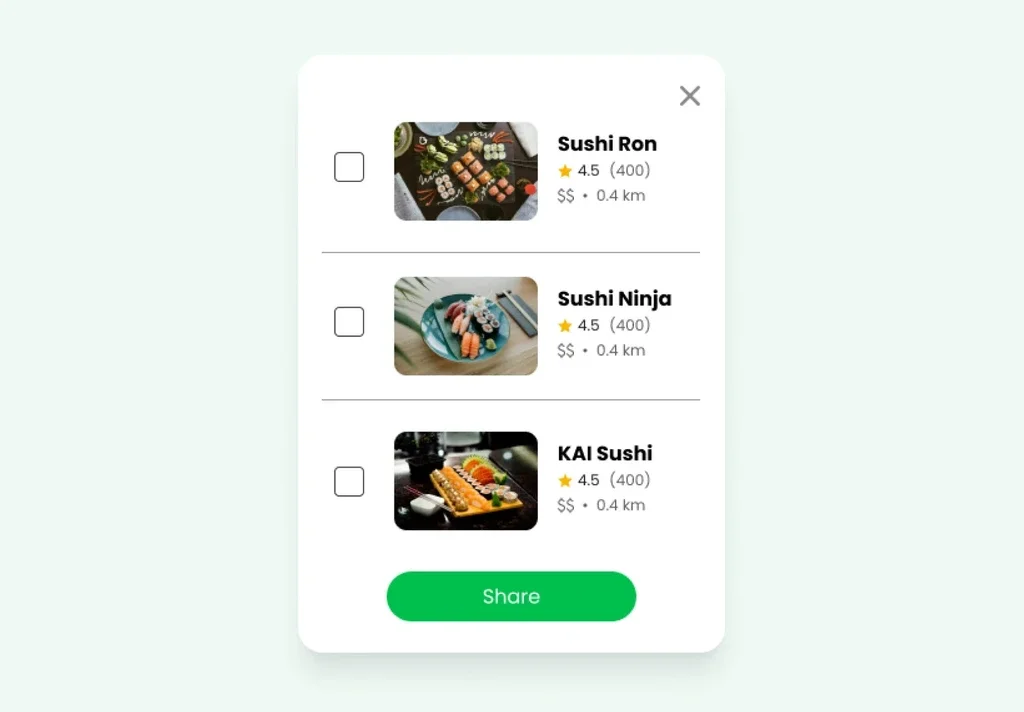
Collective decision-making features. Developed functionality to streamline group decision-making by allowing users to easily share restaurant options and vote, reducing the time and effort required to finalize decisions.
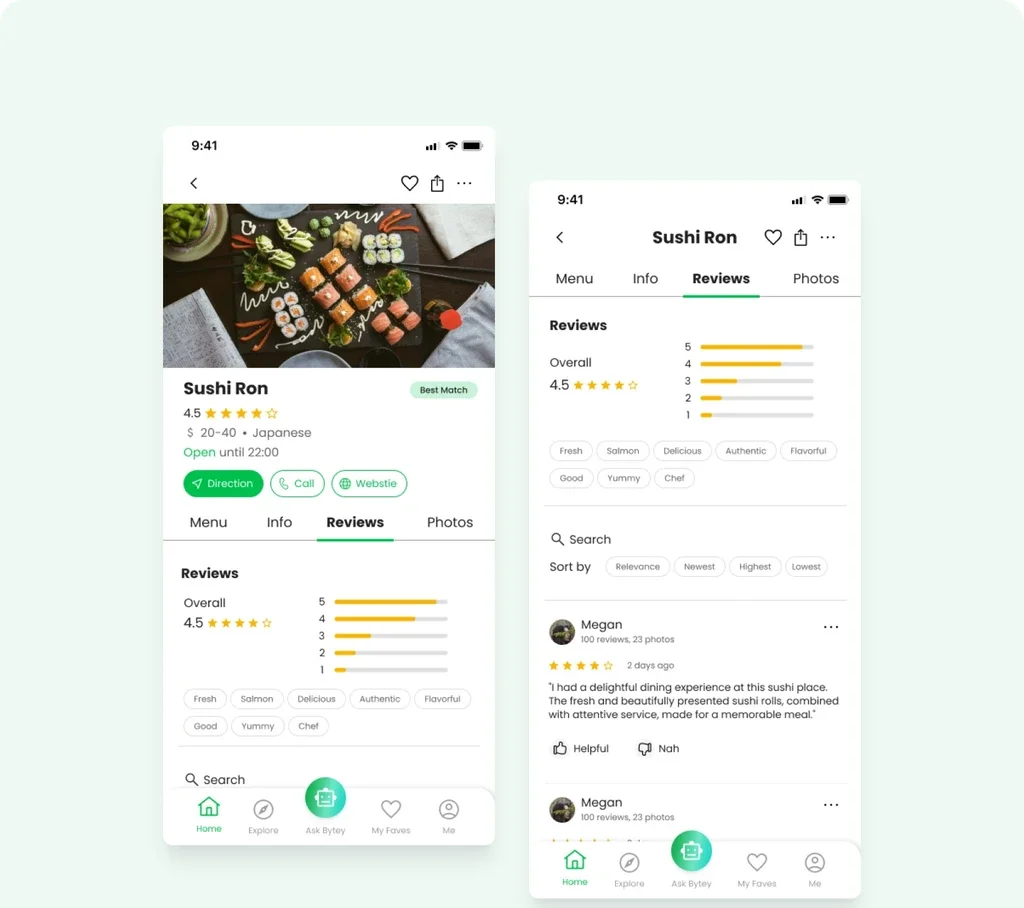
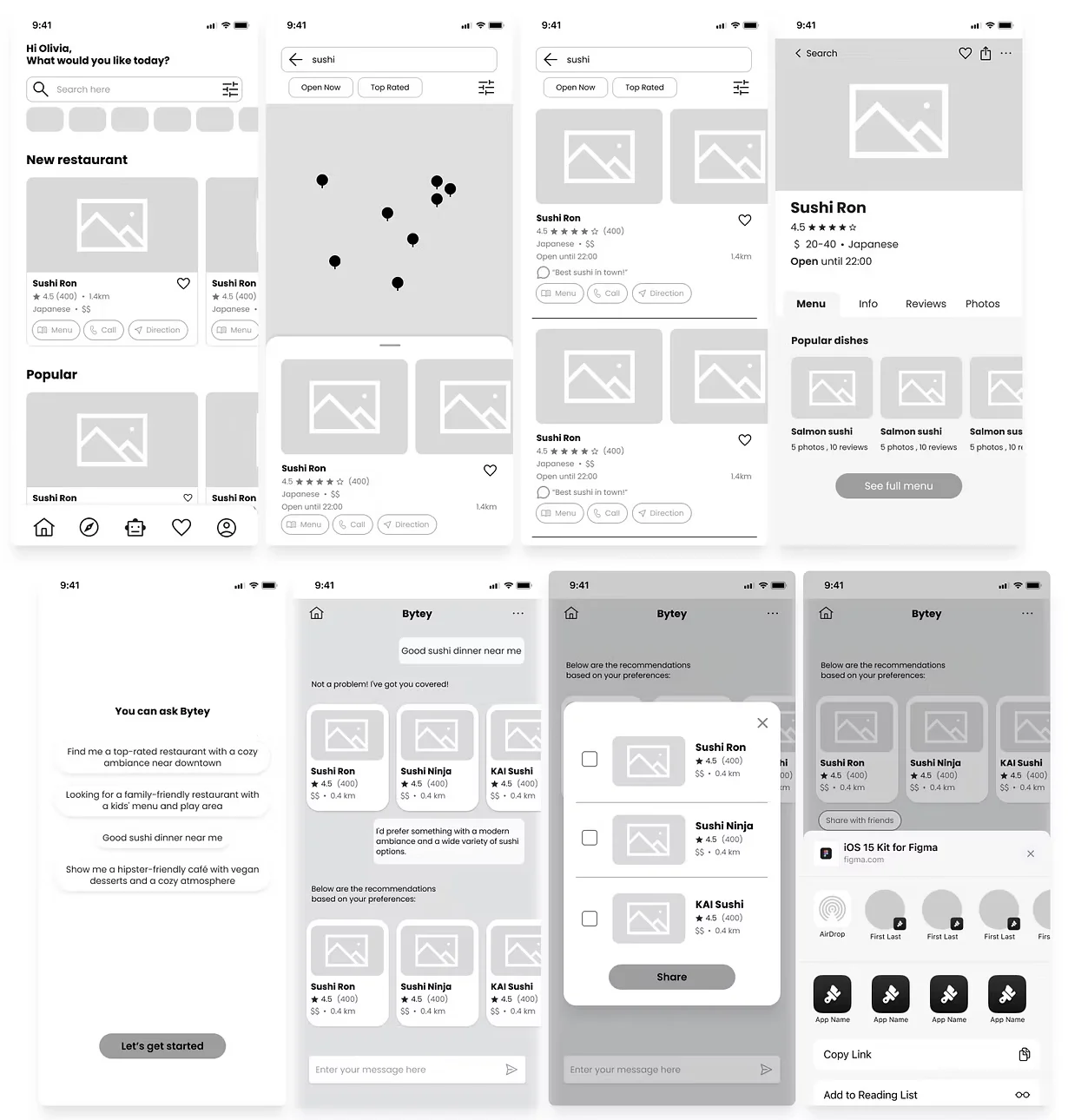
Wireframes & prototyping. Created wireframes and prototypes that incorporated AI chatbot recommendations and a user-friendly interface. The design included map integration for easy navigation and restaurant discovery.
05 · Conclusion
This solo project taught me the iterative nature of the design process. Initially, I overlooked Google Maps as a competitor, only discovering its importance during user research. I learned that successful design is not just about being unique but about addressing user needs and creating solutions that help them achieve their goals effectively.